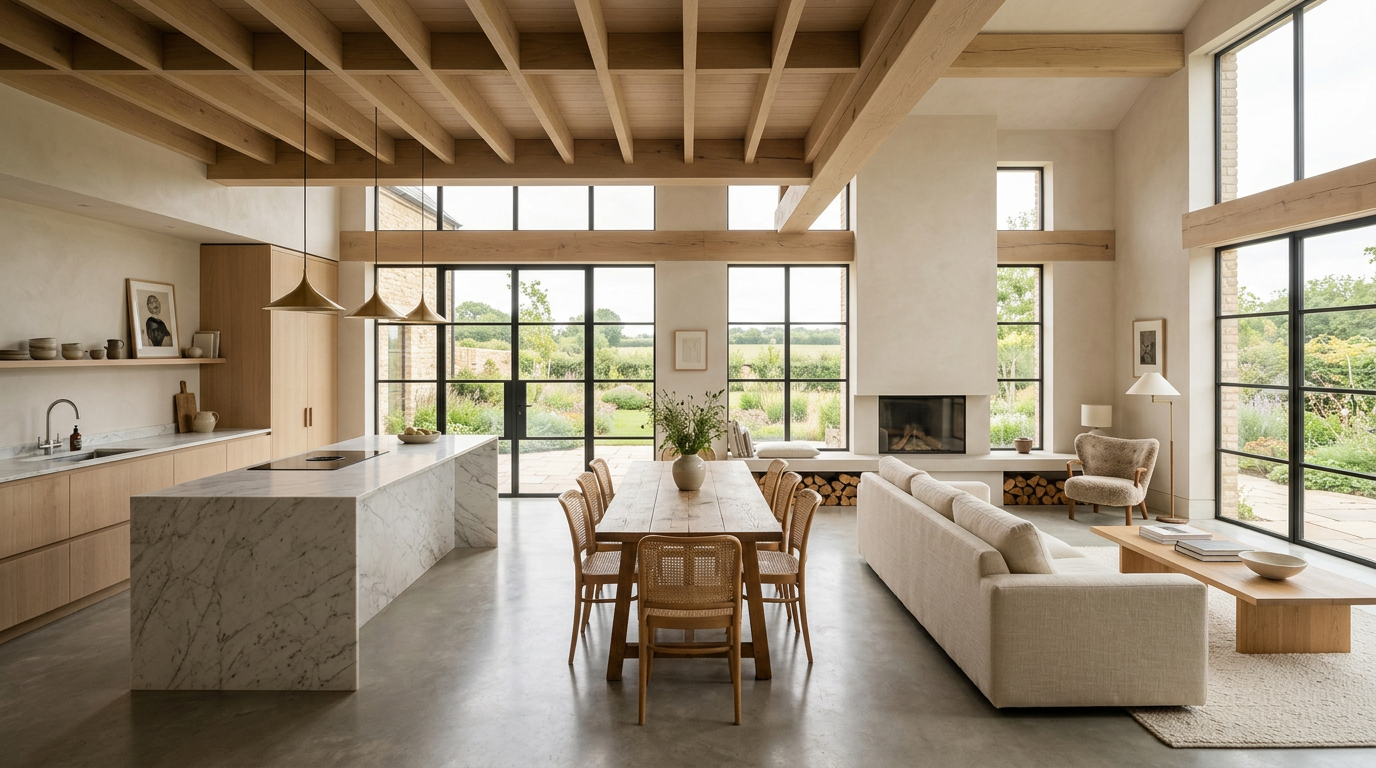
A show home is the only place a buyer experiences your specification rather than reads about it. For most of what you have installed, that distinction barely matters: a worktop looks like its photograph. For connected technology it matters entirely, because a system nobody demonstrates is a system nobody knows is there.
This post covers how to set a show home up so the technology works for the viewing: which scenes earn their place, how to demonstrate without overwhelming anyone, and the mistakes that quietly turn an asset into a liability.
Why does the show home carry so much weight?
Because it converts a claim into an experience, and buyers trust experiences.
A brochure can tell someone the lighting is controllable. A specification can list the heating zones. Neither produces the small moment of recognition when a buyer walks into a room, the lighting is already right, and it dawns on them that somebody thought about this. That moment does more work than every printed word in the campaign.
It is also the only point in the process where a buyer's assumptions get corrected in real time. Most arrive expecting something like the wireless devices they already own, and the show home is where that expectation is either revised or quietly confirmed. Our post on what buyers understand before they buy covers why that revision is worth so much.
How should the technology be set up for viewings?
So that it feels obvious rather than impressive. The aim is a house that seems well considered, not one that seems clever.
Start with a welcome. A scene that brings the hallway and the main living space gently up as the front door opens sets the tone before anyone has said a word, and it lands in the first few seconds, which is where impressions of a property are largely formed.
Then give the principal rooms one scene each that demonstrates something recognisable. A bright, even setting in the kitchen for a working morning. A lower, warmer setting in the living room for an evening. A calm, dimmed setting in the principal bedroom. Three rooms, three scenes, each one corresponding to a moment in an ordinary day the buyer can place themselves in.
Keep the heating comfortable and the controls off the walls. Part of what makes a house like this feel finished is the absence of clutter by the door, so a room that is simply the right temperature, with no thermostat in sight, is making your argument silently.
Label the keypads clearly. This sounds trivial and is not: an unlabelled keypad means the sales advisor hesitates, and hesitation reads to a buyer as difficulty.
How much should the sales team demonstrate?
Considerably less than they will be tempted to.
The most common failure in a show home is an enthusiastic demonstration of everything the system can do. Cycling through menus, showing edge cases, explaining how the scenes were built: all of it produces exactly the impression you are trying to avoid, which is that living here involves learning something.
Three or four moments, chosen because they are ordinary, will outperform a full tour every time. Press one button, let the room change, and stop talking. The silence afterwards does more than the explanation would have.
The team does not need technical knowledge. They need to be comfortable pressing the buttons and ready for the four questions that come up in nearly every viewing: how do I control it, is it difficult, what happens if the internet goes down, and can I change the settings myself. The answers are short. One control that anyone can use. No, it is designed to need no instruction. Nothing you rely on day to day needs Wi-Fi or an internet connection, so the house carries on regardless. And yes, you can adjust your own settings whenever you like, without calling anybody. Our guidance on marketing connected homes covers briefing the team more fully.
What are the common mistakes?
Three, and all of them are avoidable.
Overdemonstrating. Covered above, and worth repeating because it is the one everybody makes. Restraint is the skill.
Poor labelling. If the advisor has to think about which button does what, the buyer concludes the house is hard work. Clear, plain labels that a visitor could read and understand are not a detail.
Letting it drift. A show home open for months develops small faults: a scene that no longer matches how the room is dressed, a blind that needs recalibrating after the furniture moved. Every one of those is worse than not demonstrating at all, because a buyer who watches a demonstration fail will attribute the failure to the technology rather than the maintenance. Put a check on the schedule, the way you would for anything else in the show home.
How does the experience carry past the viewing?
Through material the buyer can take away, and through video that reaches people who never came.
Buyers rarely decide alone. Someone who was not at the viewing will be part of the conversation that evening, and whatever your visitor can recall and repeat is what that person hears. Clear homeowner-facing documentation, handed over rather than promised, lets them carry the argument home instead of reconstructing it from memory.
Video filmed in the dressed show home is the other half. Short clips of scenes changing, blinds responding to daylight, a house moving through a morning, perform well on portals and social and keep working long after the viewing. It also reaches buyers relocating from elsewhere who will never walk through the door before shortlisting you.
Where you have residents in completed homes, their words beat yours. A buyer discounts a developer describing their own specification and believes someone who lives with it. Our Maple Barn project with Kaybee Developments is a useful example of what that looks like in a finished home.
A show home is where connected technology either earns its place or quietly fails to. The difference is rarely the system and almost always the set-up: a welcome scene at the door, one good scene per principal room, clear labels, a sales team briefed on four answers, and a maintenance check on the calendar.
Do that and the technology sells itself in the first thirty seconds of a viewing, without anybody having to explain it. For how this fits into a scheme, see our developer guide, or what premium buyers expect from new-build technology.
More Insights