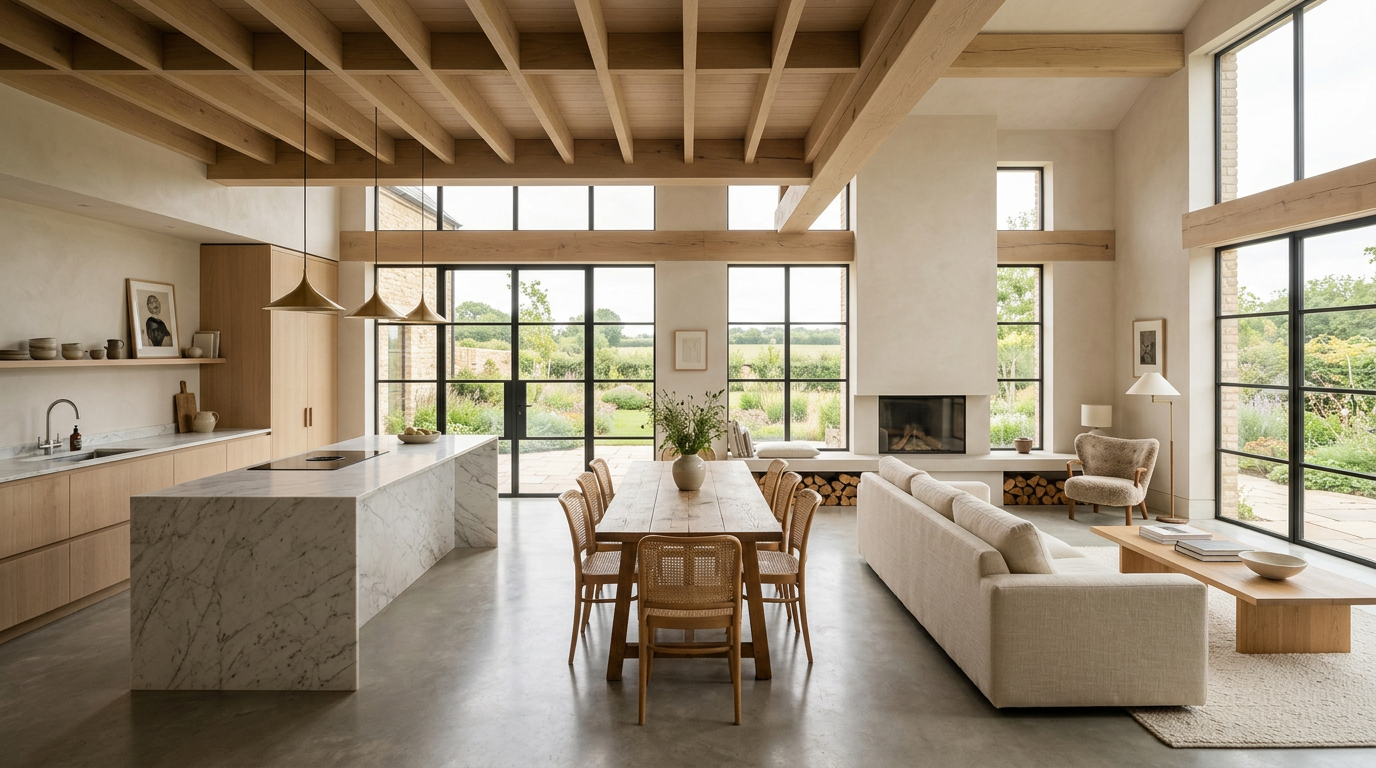
Most marketing for connected homes fails in the same way. The technology appears as a bullet point near the end of the specification list, between the wardrobes and the turf, described in language the buyer cannot picture. A considered piece of infrastructure gets the same billing as a tap.
The problem is not budget, it is framing. This post covers how to market a connected home so the investment shows up in the sale: what to lead with, what to show, where it belongs across your channels, and how to brief the people actually doing the selling.
What should the messaging lead with?
How the house feels to live in. Never what the system is.
Buyers are not interested in the standard behind the controls or the cable running through the walls. Those things matter enormously to whether the house works, and not at all to whether someone wants to live in it. Every message needs translating out of the specification and into an ordinary evening.
The translation is mechanical once you see it. Rather than stating that the property has scene-based lighting control, describe a living room that goes from bright working light to a settled evening at one press. Rather than listing zoned heating, describe rooms that are warm when they are being used and not when they are not, without anyone adjusting a thermostat. Rather than specifying automated shading, describe blinds that deal with low afternoon sun before it becomes a problem.
Same system, entirely different proposition. The first version asks a buyer to do the imaginative work themselves, and most will not bother.
Why does showing beat describing?
Because this is an experiential product being sold through static media, which is a mismatch.
A photograph of a keypad communicates almost nothing. A photograph of a room lit properly communicates a great deal but does not reveal that the lighting is controlled. The gap between those two is where most connected-home marketing disappears, and moving images are the obvious way across it.
Short video works hardest here. Fifteen seconds of a house coming into the morning, lights lifting gently, blinds opening onto the garden, is a more persuasive argument than a page of brochure copy, and it travels: portals, social, the development site, the agent's listing. Virtual tours that include a demonstration extend the show home to buyers who cannot visit, which matters on schemes selling to people relocating.
The rule for all of it is to film the effect, not the equipment. Nobody was ever moved by a close-up of a wall plate.
Where should the technology appear across your channels?
Earlier and in more places than it usually does.
Connected living needs to run through the headline messaging, the photography, the brochure and the agent briefing, not sit in a features list at the back. If a buyer only encounters it on page eleven, they will treat it as an afterthought, because you presented it as one.
On the development website, give it a dedicated section in plain language, with lifestyle photography rather than product shots. On social, show the everyday rather than the impressive: a child's room dimming at bedtime, a kitchen set for a winter morning. In the printed brochure, give it a spread rather than a line, and write it as part of the design of the house rather than as an upgrade that was available.
The cumulative message should be that this is a home built for the way people live now, with comfort designed into it, rather than a standard house with technology added. Where that positioning pays off in value terms is covered in our post on home automation and property value.
How much does the sales team matter?
More than everything else combined, because they are the only channel that answers back.
Your brochure cannot respond to a raised eyebrow. The person in the show home can, and they are the last thing standing between all of your marketing and the offer. A sales team that cannot demonstrate the system confidently, or worse, that visibly avoids it, undoes the investment several times over.
What they need is modest: a short briefing covering the benefits rather than the features, the handful of questions that come up repeatedly with suggested answers, and a simple demonstration routine for the show home. Then rehearse it, out loud, until it stops sounding like a script. Most teams are perfectly capable of selling this and have simply never been given the words.
It is worth being specific about which questions to prepare for, because they are remarkably consistent: is this the same as the speaker I already own, will it be difficult, and what happens if something goes wrong. Our post on what buyers understand before they buy covers the answers in detail.
How do you handle objections before they arrive?
By putting the answers in the marketing rather than waiting for the viewing.
Three concerns account for most hesitation: that it will be hard to use, that it will not last, and that it will cost money to keep running. All three are answerable, and a buyer who has already read the answer arrives without the objection.
So say it plainly in the brochure and on the site. The system is built to be used by anyone in the household without instruction. It runs on a wired network inside the house, so nothing you rely on day to day needs Wi-Fi or an internet connection. It is built on an open international standard rather than a single manufacturer's platform. And there is no subscription attached to living in the house.
Homeowner testimonials do this better than you can. A buyer discounts what a developer says about their own specification and accepts what a resident says about living with it. Where you have people living in completed homes, ask them, and use their words rather than improving on them.
Connected homes are not difficult to market, they are just usually marketed as equipment. Move the messaging from what the system is to how the house feels, show it moving rather than describing it, put it early in the materials rather than late, and give the sales team the words.
None of that requires more budget, only a different framing of what you are actually selling. The show home guide covers the demonstration itself, and our developer guide sets out how the system fits a scheme.
More Insights