A home automation system gets specified for what it does on day one. It gets judged on whether it still does those things three years later.
That second test is where reliability sits, and it's where wireless and hardwired systems separate into two distinct categories of product. The difference matters for developers, who carry reputational risk after handover, and for homeowners, who live with the consequences.
How wireless home automation typically fails
Wireless home automation, often marketed under the IoT label, depends on a stack of moving parts. Each part introduces a point of failure.
Most wireless devices rely on WiFi or a proprietary mesh protocol like Zigbee or Z-Wave. WiFi networks change. Routers get replaced. Channel congestion shifts. Devices that paired on day one drop off the network later and need to be reconnected manually.
Many wireless devices also rely on cloud servers run by the manufacturer. The device sends a command to the cloud, the cloud routes it back to a local hub, the hub triggers the action. If the manufacturer's servers go down, or the homeowner's internet connection drops, the device stops responding. If the manufacturer discontinues the product line, support eventually ends and the hardware can become unusable.
Battery-powered sensors and switches add another category of failure. They work until the battery dies. In a home with thirty or forty wireless devices, battery management becomes an ongoing task in itself.
Firmware updates are a further variable. An update can break compatibility with paired devices, change the user interface, or remove features. Homeowners often have no warning and no rollback option.
Where hardwired systems differ structurally
Hardwired home automation runs on physical cabling installed during the build. Power, signal, and control share the same wired infrastructure, with the cable specification matched to the protocol in use, typically KNX, DALI-2, or a similar industry standard.
There is no WiFi requirement for the system to function. Keypads, sensors, actuators, and the central controller communicate over the cable. The system does not depend on the homeowner's broadband connection, the manufacturer's cloud platform, or any wireless mesh.
Core devices are mains-powered through the wiring. There are no batteries to manage in lighting modules, heating actuators, or blind controllers. Battery devices appear only where there is no practical alternative, for example in some optional wireless override switches, and even then the wired backbone continues to function if the battery fails.
Local processing means commands execute on the controller inside the property, not on a remote server. Internet access is used for remote control through an app, optional software updates, and integration with external services where chosen. None of those are required for the system to keep running.
What unreliability costs developers after handover
For a property developer, automation reliability becomes a developer problem the moment something stops working in a handed-over home.
A homeowner whose lighting fails to respond three months after moving in does not call the manufacturer. They call the developer or the main contractor. Even where the warranty technically sits elsewhere, the developer carries the relationship and the reputation.
In a premium scheme, where homes are valued from £700,000 upwards, that reputation is part of the resale story. Buyers in the secondary market increasingly ask about the automation system, what it controls, and what state it's in. A system that has degraded since handover damages the original developer twice, once through direct callbacks, and again through the perception of build quality across the wider development.
How a pre-configured hardwired system removes the common failure points
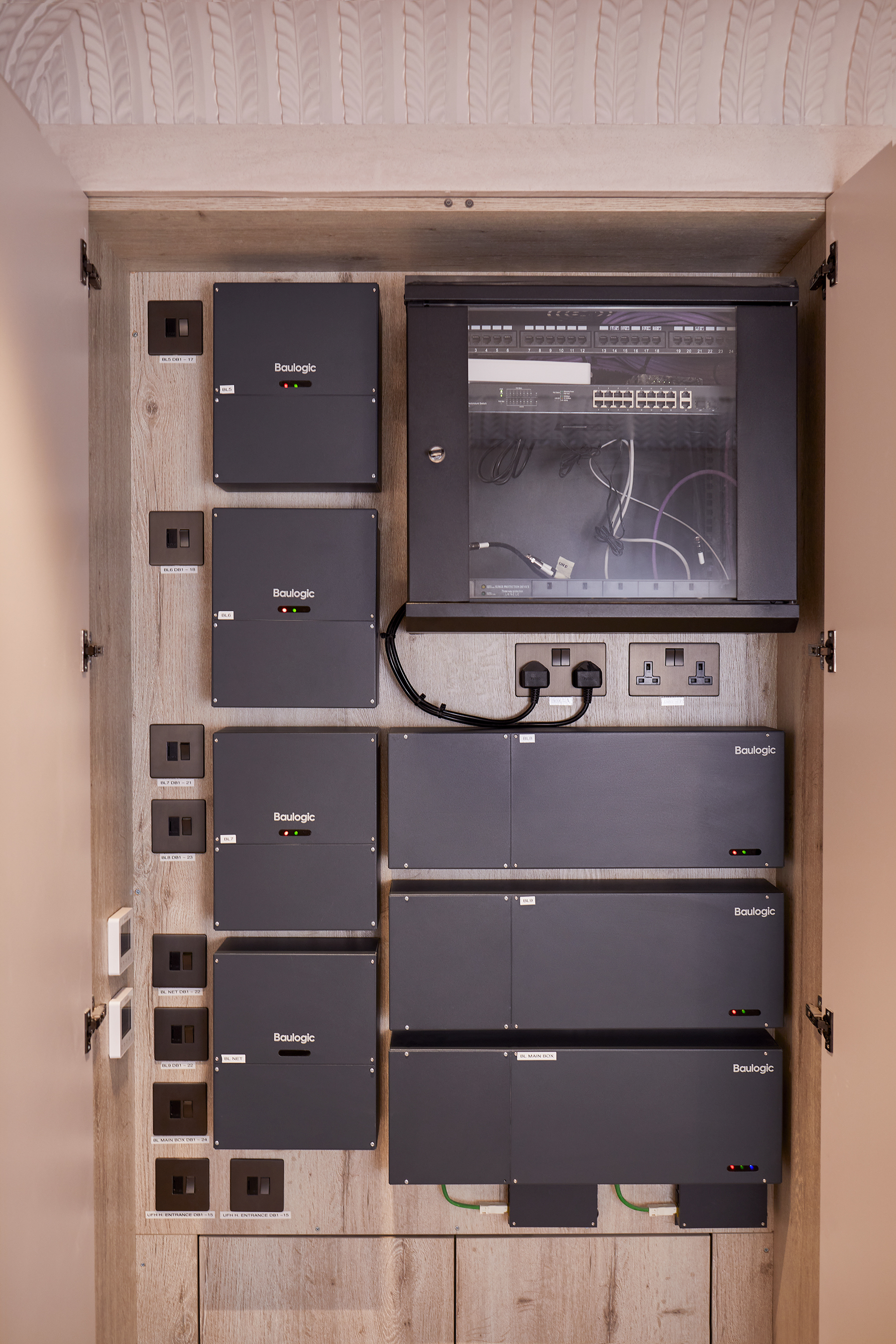
Baulogic systems are pre-configured before they arrive on site. The control logic, room assignments, and scene presets are programmed off-site against the architect's plans. The panel arrives sealed, with push-fit connections for the project electrician to wire in during first and second fix. More on this in our guide to pre-configured home automation.
This approach removes two further reliability variables that affect bespoke hardwired installs. The first is commissioning error: a system configured on site under build pressure is more likely to carry forward small misconfigurations that surface months later. The second is integrator lock-in: a system that requires a specialist integrator to make any change ties the homeowner to one company's availability, pricing, and continued existence.
Baulogic systems are modular. If a homeowner wants to add a zone, change a scene, or extend control to a new area of the house, the hardware and the configuration tools are designed to allow that without a return visit from a specialist.
What this looks like in practice: Maple Barn
Maple Barn, a four-bedroom new build by Kaybee Developments, runs Baulogic across heating, lighting, blinds, and security. The property also includes solar PV with battery storage, an air source heat pump, and MVHR, all coordinated through the automation system.
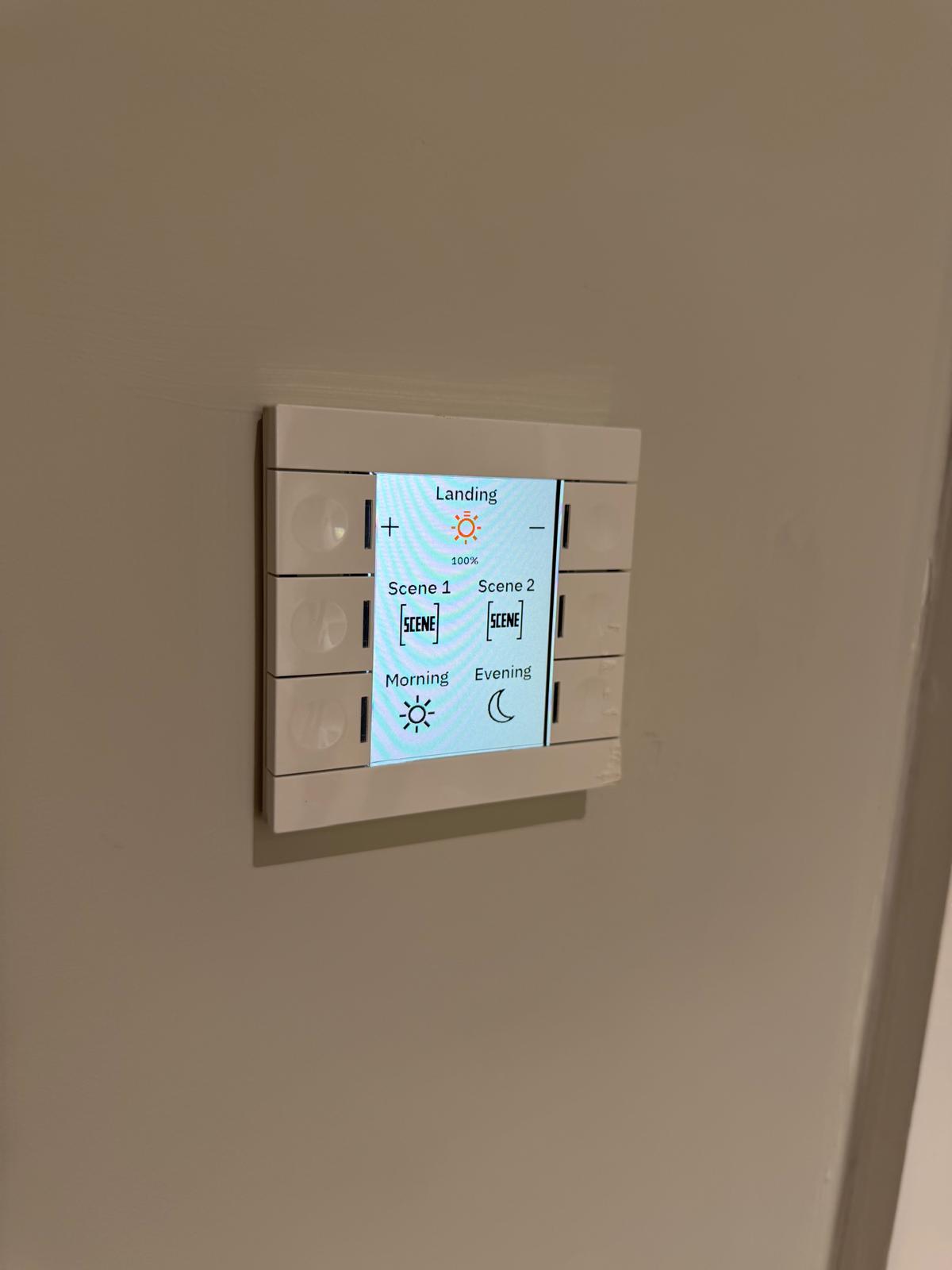
Multi-functional keypads sit in each room. Multi-zone underfloor heating, electric underfloor heating in ensuites, and towel rails are managed through the same controller, alongside preset scenes for goodbye, goodnight, welcome, and good morning.
The system handles roughly 500 temperature control events per week. None of those events depend on WiFi or a cloud server. The homeowner can adjust scenes, schedules, and zones directly from the keypads or the app without calling anyone back to site.
What this means at specification stage
For developers and self-builders deciding between wireless and hardwired automation, the reliability question resolves into a small number of structural points.
If the system must keep working without the homeowner's internet connection, hardwired is the only option. If the system must continue to function after a manufacturer's cloud platform is discontinued, hardwired is the only option. If the build programme calls for the automation to be installed by the project electrician on standard first and second fix, a pre-configured hardwired system fits, and a wireless retrofit does not.
These questions sit at the infrastructure level, and they're easier to answer at RIBA Stage 3 or 4 than after handover.
Wireless home automation is straightforward to add to a finished home. That same characteristic, the lack of installed infrastructure, is why it tends to degrade unpredictably over time.
For any new build or major refurbishment where the electrical works are open, the case for specifying hardwired infrastructure at first fix is structural. The wiring goes in once. The reliability that follows is a function of the cabling, not the software running on top of it.
The decision sits with the M&E package. The cost of including hardwired infrastructure at first fix is significantly lower than the cost of either retrofitting it later or absorbing the support burden of an unreliable wireless system after handover.
More Insights