
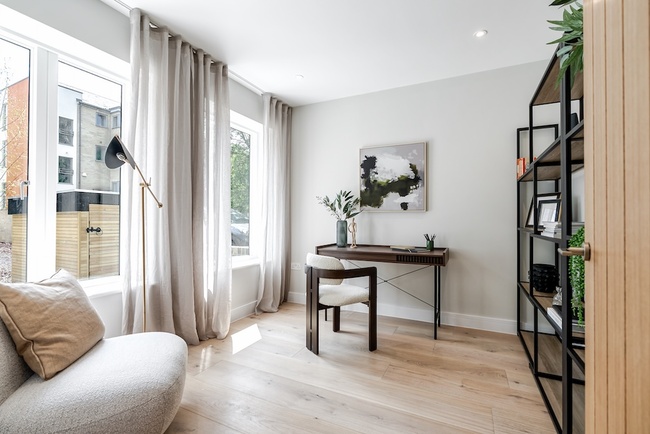
Good air quality is one of those things you only notice when it's wrong. A bathroom that stays steamy long after a shower. A bedroom that feels stuffy by morning. A kitchen where cooking moisture lingers on the windows. These are signs that ventilation isn't keeping up with the conditions inside the home.
In a well-sealed, highly insulated new build, the kind of property Baulogic is designed for, this is especially relevant. The same thermal performance that keeps heating bills low also means moisture and CO2 have fewer ways to escape naturally. Mechanical ventilation with heat recovery (MVHR) handles this, but it typically runs at a fixed rate. When conditions change, it doesn't automatically respond.
Baulogic Smart Events bridge that gap. When humidity or CO2 levels rise above a set threshold, a Smart Event boosts the MVHR system automatically, improving air quality in the moment it's needed, then returning to normal once conditions settle.
The Smart Event: humidity and CO2 ventilation boost
The automation uses Baulogic's environmental sensors to monitor indoor conditions and respond when they drift outside a comfortable range:
WHEN humidity rises above a set percentage (or CO2 rises above a set level)
THEN boost the MVHR system
When the humidity or CO2 level drops back below the threshold, a corresponding Smart Event returns the MVHR to its normal operating mode. The result is a ventilation system that responds to what's actually happening in the home, rather than running at a constant rate regardless of conditions.
You can set separate events for humidity and CO2, with different thresholds for different rooms. A bathroom might have a humidity trigger set at 70%, while a bedroom might have a CO2 trigger set at 800 ppm. Each event is independent and tailored to the space.
Why this matters in modern new builds
Building regulations have driven a significant shift toward airtight, energy-efficient homes. This is positive for heating costs and carbon emissions, but it creates a new challenge: without adequate ventilation, moisture and CO2 accumulate faster than they would in an older, draughtier property.
MVHR systems address this by continuously exchanging stale indoor air for fresh outdoor air while recovering heat from the outgoing stream. Most MVHR units run at a set speed, which is designed to handle typical conditions. But typical conditions aren't constant. A shower generates a sudden spike in humidity, cooking produces moisture and particulates, and a bedroom occupied by two people overnight sees CO2 levels climb steadily.
A fixed ventilation rate is a compromise. Smart Events remove the compromise by adjusting the ventilation rate to match what's actually happening.
Humidity: where and when it matters
Bathrooms. A shower can push bathroom humidity above 80% in minutes. Without an adequate response, moisture settles on cold surfaces, creating conditions for mould growth. A Smart Event boosting MVHR the moment humidity crosses 65–70% clears the moisture faster and protects the fabric of the room.
Kitchens. Boiling water, cooking with steam, even running the dishwasher: all generate moisture. A humidity-triggered MVHR boost during and after cooking keeps the kitchen clear without needing to open windows (which would waste heating energy in winter).
Drying rooms. Homes that include a drying room or utility space for laundry see sustained high humidity when clothes are drying. A Smart Event can keep the MVHR boosted for as long as humidity remains elevated, ensuring the space stays well ventilated.
CO2: the invisible comfort factor
CO2 levels in occupied rooms rise through normal breathing. In a sealed bedroom with two occupants, CO2 can reach levels that affect sleep quality within a few hours, often without anyone being aware of it.
Research consistently links elevated indoor CO2 to poorer sleep, reduced concentration, and a general sense of stuffiness. The thresholds are lower than most people expect: outdoor air sits around 400 ppm, and anything above 1,000 ppm indoors is considered poor air quality.
A Smart Event set to boost MVHR when bedroom CO2 exceeds 800 ppm ensures the room stays fresh overnight. The boost runs quietly, clears the air, and returns to normal once the level drops, all without disturbing anyone's sleep.
Combining humidity and CO2 triggers
In practice, humidity and CO2 often rise together: a bathroom after a shower has both elevated moisture and elevated CO2 from the occupant. You can create Smart Events that respond to either trigger independently, or use the AND condition to require both:
WHEN humidity rises above 70%
AND CO2 is above 800 ppm
THEN boost MVHR to maximum
This kind of combined trigger is useful for avoiding unnecessary boosts. If humidity is slightly elevated but CO2 is normal (perhaps from a brief use of the shower), a lower boost or no boost might be appropriate. If both are high, a full boost is warranted.
The flexibility of the WHEN / AND / THEN structure lets you calibrate these responses to suit your home and your preferences.
The health and comfort benefits
Better sleep. Bedrooms with managed CO2 levels deliver noticeably better sleep quality. It's one of those improvements that's hard to see but easy to feel: waking up feeling more rested, without the heaviness of stale air.
Mould prevention. Persistent high humidity is the primary driver of mould growth in modern homes. By responding to humidity spikes as they occur, Smart Events reduce the risk significantly.
Comfort without draughts. Boosting MVHR achieves better air quality without opening windows, which would let in cold air, noise, and potentially compromise security. The home stays sealed, warm, and quiet while the ventilation system does the work.
Protecting the building fabric. Excess moisture doesn't just affect comfort. It can damage window frames, plasterwork, and internal finishes over time. Proactive ventilation management protects the long-term condition of the property.
Setting it up yourself
If your Baulogic system includes humidity and CO2 sensors alongside MVHR control, creating these Smart Events is done through the same process as any other. Open Smart Events from My Settings, select the environmental sensor as the trigger, set the threshold, choose the MVHR boost as the action, and save.
You can create separate events for different rooms, set different thresholds for humidity and CO2, and add conditions such as time of day. As with all Smart Events, you can adjust, enable, or disable them at any time without involving an integrator.
Automated ventilation boosting is a Smart Event that addresses one of the hidden challenges of modern, energy-efficient homes: maintaining air quality in a sealed envelope. By responding to humidity and CO2 levels as they change, Baulogic ensures your MVHR system works harder when it needs to and conserves energy when it doesn't.
It's the kind of automation that most people never think about. But once it's running, the difference in how the home feels is unmistakable. Fresher air, better sleep, drier bathrooms, and a home that manages its own environment without being asked.
To discuss how environmental sensors and MVHR control can be integrated into your Baulogic system, speak with the Baulogic team or explore our frequently asked questions.
More Insights

.png)
