A property developer planning a four-bedroom new build in Surrey faces a decision early in the M&E specification. Should home automation be in the package, and if so, what kind, specified when, installed by whom, and at what cost to the build programme?
Get the answer right and the system is part of the first fix, commissioned before plastering, and signed off at handover with no callbacks. Get it wrong and it lands as a retrofit problem six months after the homeowner moves in.
This guide covers how to specify a whole-home automation system for a UK new build or self-build in 2026. It walks through what the system needs to control, the infrastructure required, where it sits in the build programme, how to compare vendors, and what to check at handover.
When to specify home automation in a new build
The earliest useful point to specify a home automation system is the M&E design stage, before the electrical drawings are issued for tender. At that point, the system can be designed into the first fix wiring rather than worked around it.
Specifying late, after first fix is underway, creates two problems. The first is wiring. A hardwired system needs structured cabling pulled to every controlled point: lighting circuits, blinds, heating zones, door contacts, keypads. Adding that after first fix means either chasing walls a second time or accepting a partial system.
The second is coordination. Home automation touches lighting design, heating controls, blinds, security, and AV. If those packages are tendered separately without an automation system in mind, the integration work falls into the gap between them.
For self-builders, the practical point to lock in the decision is when the architect issues drawings for building control. That's usually four to six weeks before first fix begins.
What the system needs to control
A whole-home automation system in a premium UK new build typically covers five areas. Lighting is the largest. This includes circuit-level control of standard fixtures, dimmable LED, and any architectural lighting such as DALI-2 tracks or feature pendants.
Heating and cooling is the second. In most new builds this means multi-zone underfloor heating downstairs, individual zone control upstairs, electric underfloor heating in ensuites, towel rails, and any cooling system such as a Daikin VRV. If the property has an air source heat pump, the automation system manages the call for heat, not the heat pump itself.
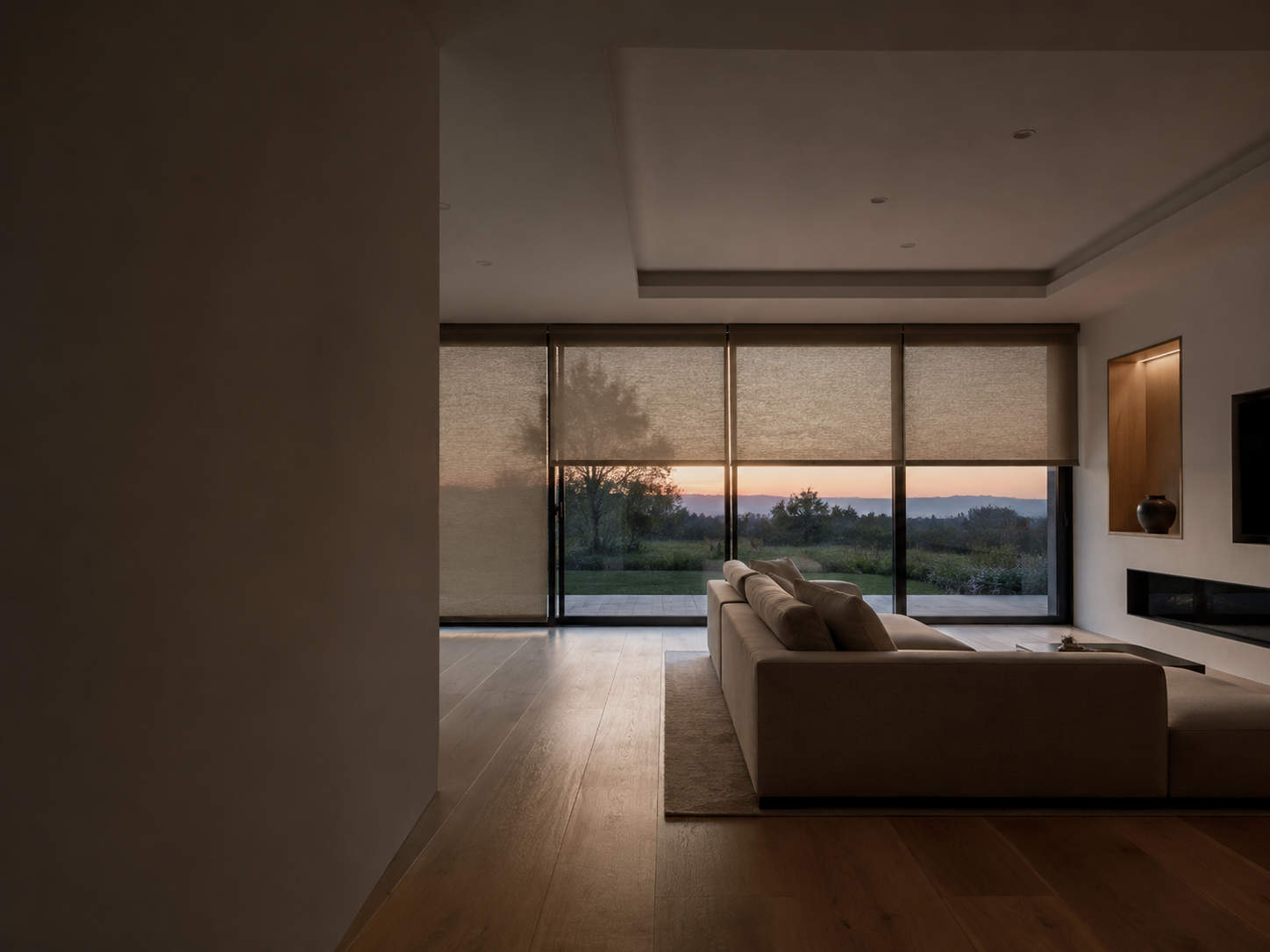
The third is shading. Motorised blinds, curtains, or external shutters integrated into the same control layer as lighting.
The fourth is security. Door and window contacts, motion sensors, smoke detectors, and any cameras. The automation system handles the alerts and the scenes, not the monitoring contract.
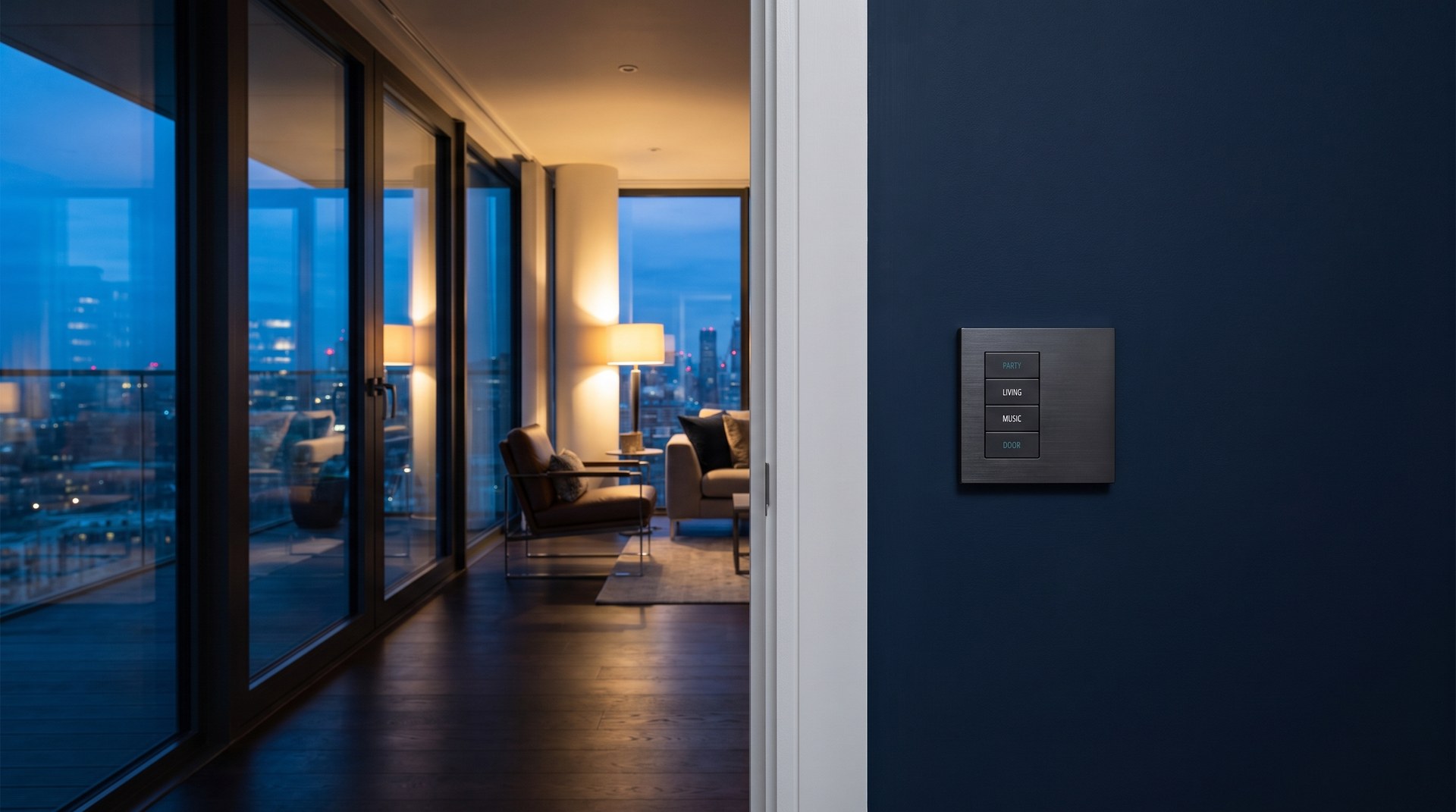
The fifth is scene control. Goodbye, goodnight, welcome, and good morning scenes that combine the four above into single inputs from a keypad or app.
At Maple Barn, a four-bedroom new build by Kaybee Developments, the system manages heating, lighting, blinds, and security across all five areas. The home also runs solar PV with battery storage, an air source heat pump, and MVHR, and the automation layer handles the interface between them and the homeowner. The system logs around 500 temperature control events per week.
Infrastructure requirements
A hardwired home automation system needs three pieces of infrastructure in place during first fix.
The first is structured cabling. Cat6 runs from a central control panel location to every keypad, touchscreen, and control point. For lighting, the circuits are wired conventionally to the lighting control module rather than to standard switch drops.
The second is the panel location. The control panel needs a dedicated space, typically in a utility cupboard, plant room, or under-stairs cupboard. It needs power, ventilation, and access for first commissioning and any later service work.
The third is the network. Home automation does not need WiFi to function, but the homeowner will want app control, so a wired LAN with a hardwired access point or two is part of the spec. The automation system itself runs on its own bus, not on the home network.
For electricians, this is closer to a standard first fix than it looks. A pre-configured modular system arrives with the panel built, labelled, and wired internally. The site work is pulling Cat6 to the right places and terminating it into push-fit plugs on the panel. No bus programming, no software commissioning by the electrician.
Where it sits in the build programme
Home automation maps onto the build programme in four phases.
Design stage. System specified, panel location agreed, lighting design coordinated with the automation schedule, cable schedule issued to the electrician.
First fix. Cat6 pulled to all control points. Lighting circuits wired back to the panel location. Panel delivered to site, pre-configured.
Second fix. Keypads, touchscreens, and sensors fitted. Panel installed and connected. Power on.
Commissioning and handover. System tested room by room. Scenes confirmed with the homeowner or sales team. Walkthrough on the app and keypads. Documentation handed over.
For a typical four-bedroom new build, the additional time on a competent electrician's programme is one to two days across the full job. There is no specialist integrator visit required.
Comparing vendors
When developers and self-builders compare home automation systems, the meaningful differences are structural rather than aesthetic. Five questions separate the categories.
Is the system hardwired or wireless? Hardwired systems run on a dedicated bus and do not depend on WiFi or the home network. Wireless systems use mesh protocols or WiFi. KNX, Lutron, Loxone, and Baulogic are hardwired. Many consumer-tier systems are wireless.
Does it require a specialist integrator? Crestron and Control4 are installed and programmed by certified dealers. The homeowner cannot easily make changes without going back to the integrator. Loxone and KNX sit in the middle, with both integrator and competent installer routes depending on the project. Baulogic is installed by any competent electrician and configured out of the box.
Is it pre-configured or custom-programmed? Crestron and Control4 systems are custom-programmed per project. KNX is bus-programmed by an ETS specialist. Baulogic is pre-configured and modular, delivered ready to install, with homeowner-customisable scenes after handover.
Does it depend on the cloud? Some systems route control through cloud services, which means an internet outage affects the home. A hardwired system with local control continues to work without internet; only remote app access is affected.
Can the homeowner change it themselves? This is where the practical difference between systems shows up after handover. If a homeowner wants to change a scene, add a keypad function, or rename a zone, can they do it themselves, or does it need a service visit?
The right answer depends on the project. A £5M Mayfair penthouse with a full-time integrator on retainer is a different brief from a £900,000 self-build where the owner wants to manage the system themselves.
What to check at handover
Five things to confirm before signing off the system at practical completion.
- Every controlled point works from every input. Each light, blind, and heating zone responds to the keypad, the touchscreen, and the app.
- Scenes are configured and named. Goodbye, goodnight, welcome, good morning, plus any project-specific scenes.
- The homeowner has app access. Accounts set up, devices paired, remote access tested.
- Documentation is on site. Panel schedule, cable schedule, scene list, and user guide.
- The route for future changes is clear. Whether the homeowner can self-serve or needs a service contact, this is established at handover, not discovered six months later.
For developers, the fifth point matters most for buyer satisfaction. Callbacks for system changes after sale are a common source of friction. A system the homeowner can adjust themselves removes most of them.
A note on cost
Home automation costs vary widely by scope and system. For a four-bedroom new build with full whole-home control across lighting, heating, blinds, and security, budget ranges from around £15,000 to £80,000 depending on the system specified and the level of architectural lighting and shading involved.
The cheaper end of the range covers a hardwired, pre-configured modular system installed by the project electrician. The upper end covers a custom-programmed integrator-led system with bespoke interfaces, multi-room AV integration, and ongoing service contracts.
For a £1M new build, a reasonable benchmark for home automation as a proportion of the M&E package is two to five percent of build cost, depending on scope.
Home automation specified at design stage and installed during first fix is a controlled, predictable line on the build programme. Specified late, it becomes a coordination problem.
The decisions worth making early are which areas the system needs to control, whether the project wants a pre-configured modular system installable by the project electrician or a custom-programmed integrator-led one, and how the homeowner will manage the system after handover.
If you are at M&E design stage on a UK new build or self-build, the next step is a cable schedule and panel location agreed with your electrician. Everything else follows from there.
More Insights