Self-build projects offer unparalleled opportunity to create truly intelligent homes from the ground up. Unlike retrofitting existing properties, building from scratch allows for optimal technology integration, hidden wiring, and system architecture designed specifically for your needs.
This guide walks through the critical technology decisions self-builders face, from initial planning through final commissioning, ensuring you create a smart home that's both functional and future-ready. At Baulogic, we specialize in making this process straightforward for custom home builders.
Pre-Construction Planning
Successful smart home integration begins during the design phase. Work with your architect to identify locations for central equipment, plan conduit runs, and ensure adequate power distribution. Consider creating a dedicated technology closet with climate control and backup power.
Document your automation goals early - lighting scenes, climate zones, security coverage, and entertainment distribution all influence architectural and electrical decisions. Our self-build automation solutions are designed to integrate seamlessly during the planning stage.
Structured Cabling Infrastructure
Despite wireless advances, structured cabling remains essential. Run Cat6A or KNX to all rooms for future-proof networking. Include dedicated runs for PoE devices like access points, cameras, and intercoms. Over-provision outlets - technology needs always expand. Baulogic specifically works on KNX.
Smart Lighting and Electrical
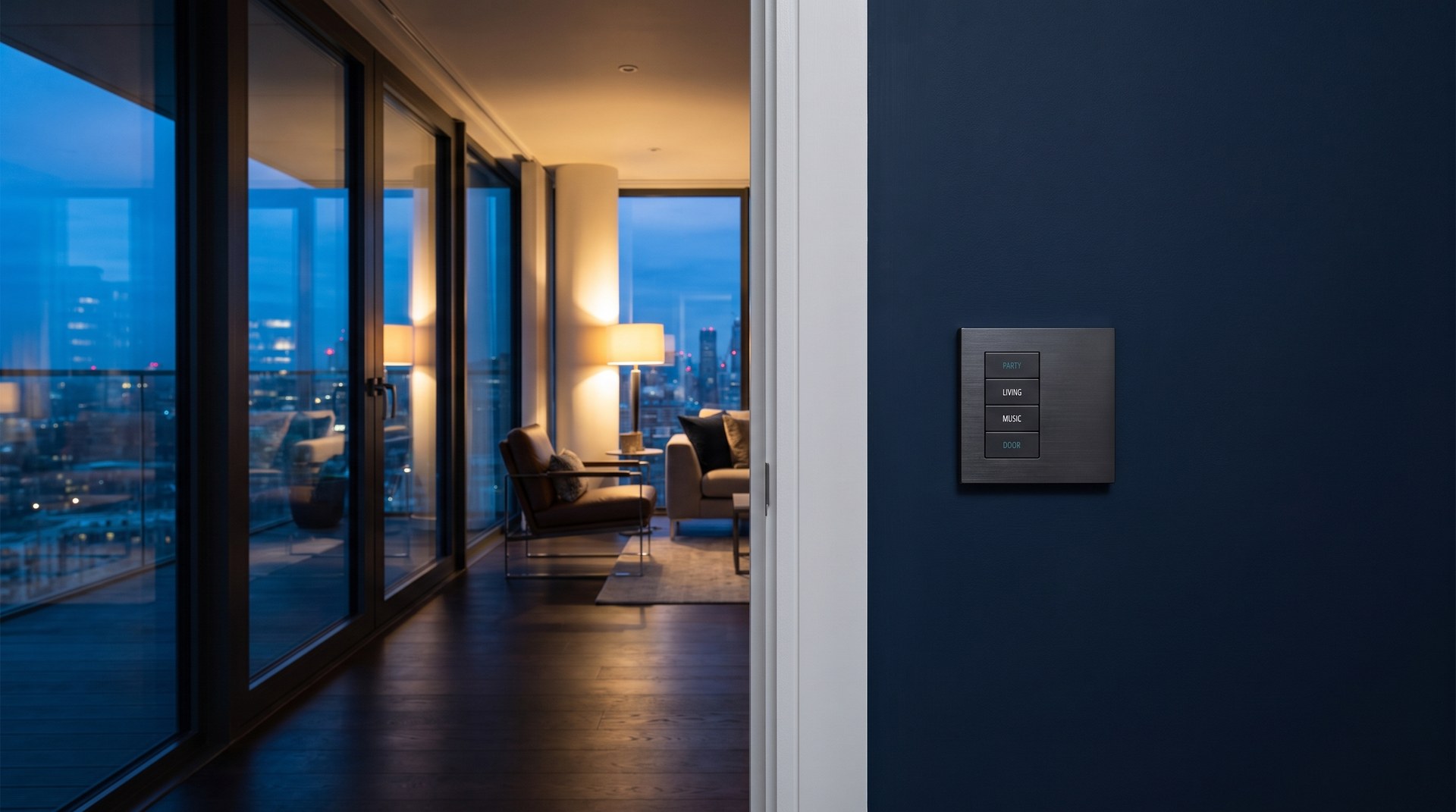
Specify smart switches and dimmers that work with your chosen automation platform. Lutron, Control4, and Loxone offer robust solutions for self-builds. Plan for neutral wires at all switch locations to support modern smart switches.
Consider motorised shading systems during construction when mounting hardware can be concealed within walls and plenums.
HVAC and Energy Systems
Modern self-builds should incorporate smart thermostats, zone control, and energy recovery ventilation with automation integration. If including solar or battery storage, ensure the inverter and management system support smart home connectivity.
Security and Access Control
Pre-wire for cameras with views of all entry points. Install commercial-grade access control rather than consumer smart locks for durability. Consider integrating gate automation, garage doors, and perimeter detection into a unified security system.
System Integration Platform
Choose your integration platform early as it influences specification decisions throughout. Leading options include Control4, Crestron, Loxone, and Home Assistant for different budget points and technical capabilities.
For more guidance on regulatory requirements, see our companion article on building regulations and compliance.
Self-build projects offer the best opportunity to create comprehensively integrated smart homes. By planning technology infrastructure during design, specifying quality components, and working with experienced integrators, you can build a home that's intelligent, efficient, and adaptable to future innovations.
The key is treating smart home technology as essential infrastructure rather than an afterthought, integrating it as thoughtfully as plumbing or electrical systems. Ready to start planning your self-build? Calculate your automation costs, explore our frequently asked questions, or speak with our team about your project.
More Insights