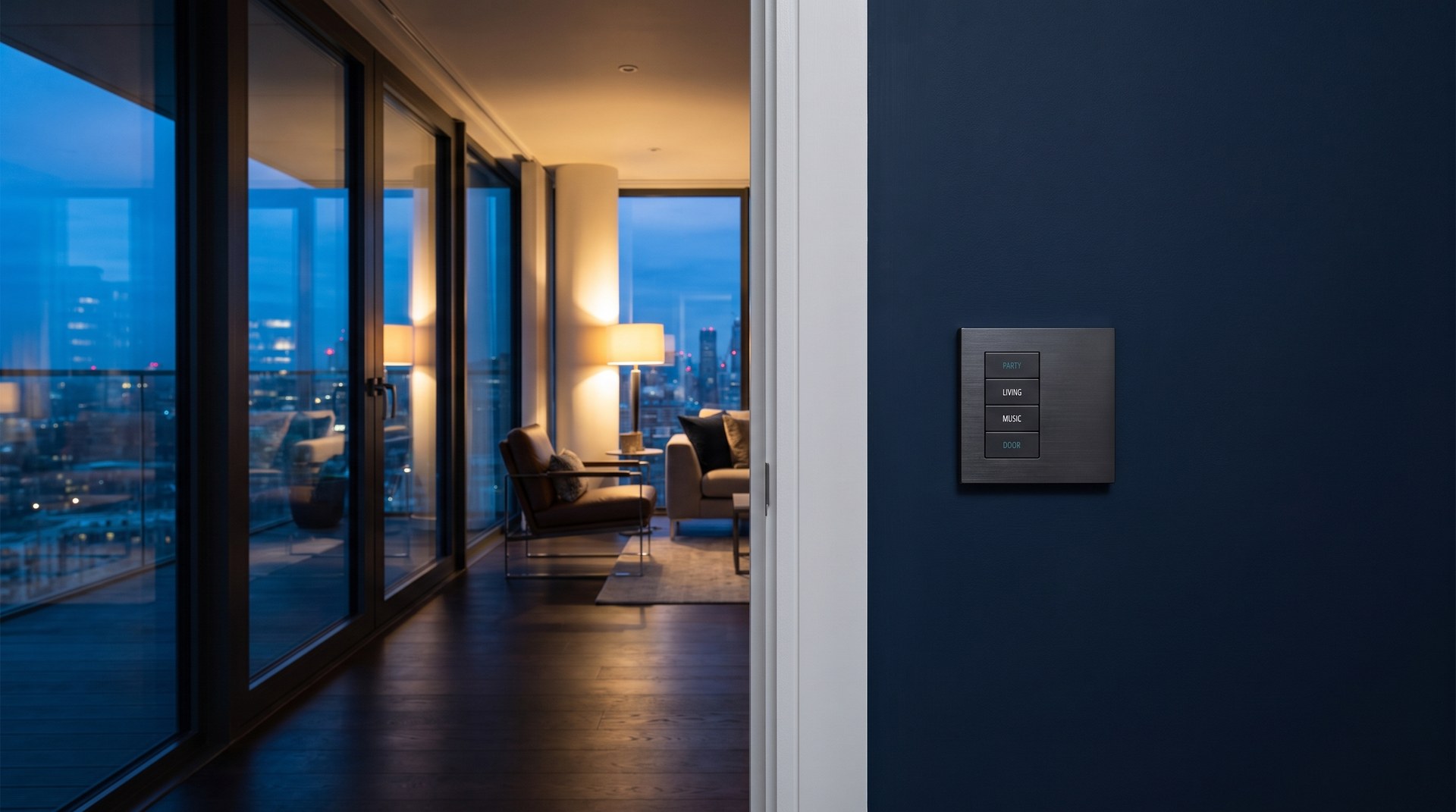
A four-bedroom new build typically carriesbetween 40 and 80 lighting circuits, multiple heating zones, motorised blindsin the principal rooms, and a CCTV/motion detection security setup. Specifyingthat as a single coordinated system used to mean bringing in a customintegrator at RIBA Stage 3, briefing them on every room, and waiting for abespoke program to be written and commissioned after second fix.
A pre-configured home automation systemremoves most of that work. The control logic, room scenes, and device behaviourare set before the panel leaves the factory. The electrician installs it aspart of the standard first and second fix. The homeowner gets a working systemon the day they move in, and can adjust it themselves afterwards.
This post covers what pre-configured means inpractice, how it slots into a new build programme, and what it changes fordevelopers, self-builders, and the contractors installing it.
What pre-configured actually means
In a traditional home automation install, every project is programmed from scratch. The integrator writes the logic foreach room, each scene, and each device. Any change after install requires the integrator to come back, open the program, and rewrite it.
A pre-configured system arrives with the logical ready written. Lighting scenes, heating zones, blind positions, and security responses are mapped to the project's room schedule before the panel is built.The system is shipped as a sealed module with labelled connections. The electrician wires it in. Nothing is programmed on site.
The configuration is not generic. It is built for the specific property using the architect's plans, the electrical schedule, and the device list. What is removed is the on-site programming step, not the project-specific design.
Where it fits in the build programme
Pre-configured systems are specified at M&E design stage, usually around RIBA Stage 3 or 4. The control logic is finalised once the room schedule, lighting design, and HVAC layout are locked in. The panel is then built off-site while the rest of the construction continues.
First fix is standard. The cabling is run on a structured wiring plan, with control cables back to a central location, usually a plant room or utility cupboard. Any competent electrician can do this work from the supplied drawings. There is no specialist cabling requirement beyond what is already standard for hardwired control systems.
Second fix is also standard. Keypads, switches, thermostats, and sensors are installed in their final positions and connected to the pre-wired runs. The panel is mounted, plugged in, and powered up.
Because the configuration is already loaded, there is no commissioning week at the end of the project. The system works on power-up. Any adjustments, scene tweaks, schedule changes, or device additions, are made through the homeowner interface afterwards.
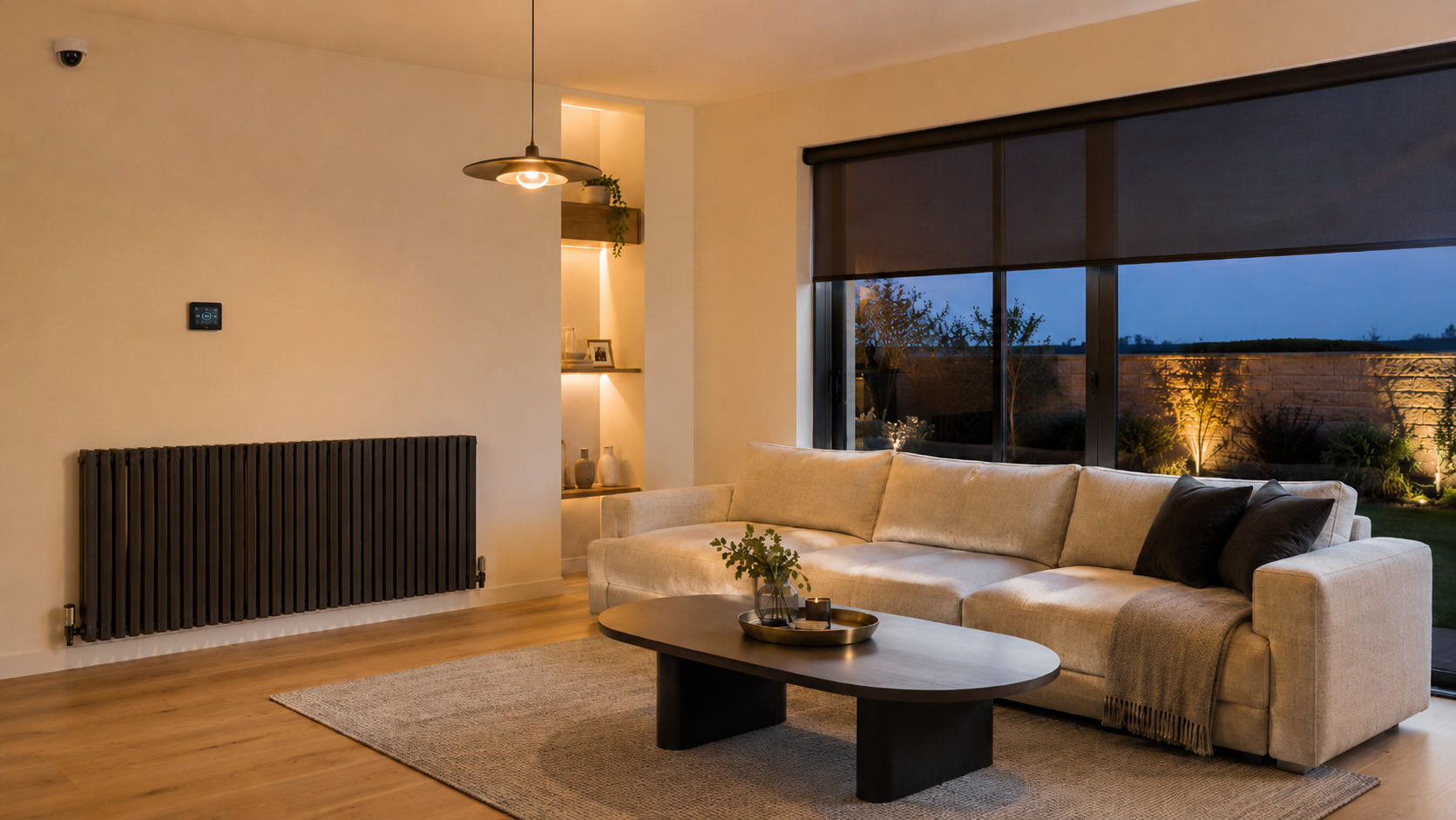
What it replaces in the specification process
The traditional integrator workflow has several steps that a pre-configured system removes:
- A separate design phase for the control system, on top of the M&E design.
- An on-site programming visit, usually one to two weeks after second fix.
- A homeowner training session to explain what the integrator has built.
- A support contract for ongoing changes.
In a pre-configured model, the design phase is folded into the M&E spec. The programming is done off-site. The homeowner interface is consistent across projects, so training is a short walkthrough rather than a learning curve. Ongoing changes are made by the homeowner without a callback.
For developers, this collapses two specialist trades into one electrical package. For self-builders, it removes a relationship that typically extends past handover.
What the electrician needs to know
The install is treated as a standard electrical sub-system. The contractor is supplied with:
- A structured wiring schedule showing every cable run and termination.
- A device schedule for keypads, sensors, thermostats, and any third-party hardware.
- The panel itself, pre-built and labelled.
- A commissioning checklist for power-up and handover.
There is no software work on site. There is no proprietary tool required to bring the system online. If the cabling matches the schedule and the devices are wired to the correct terminals, the system runs.
This matters for two reasons. It means the contractor can quote the work as part of the electrical package without subcontracting. And it means the contractor is not left holding support liability for a system they did not program.
What the homeowner gets on handover
On the day of handover, the system is live. Lighting scenes work from the keypads. Heating runs to schedule. Blinds respond to the assigned controls. Security is armed and disarmed from the agreed locations.
The homeowner interface, accessed from a wall-mounted touchscreen, a mobile app, or both, allows them to:
- Adjust scenes, change which lights are on at which level for "evening", "watching TV", "goodnight", and so on.
- Reschedule heating and cooling by zone.
- Add or rename rooms and devices.
- Set up new automations between devices, for example linking a motion sensor to a lighting scene.
None of this requires the system to be opened by a specialist. The homeowner controls the configuration directly.
The case for an integrator
Some projects may require a high degree of bespoke programming beyond standard lighting, heating, blinds, and security. A pre-configured system covers what most premium residential schemes specify.Projects with unusual requirements, complex AV integration across multiple zones, or non-standard third-party hardware, are better served by the BaulogicBespoke route, which offers a service of consultancy and detailed design.
A worked example: Maple Barn
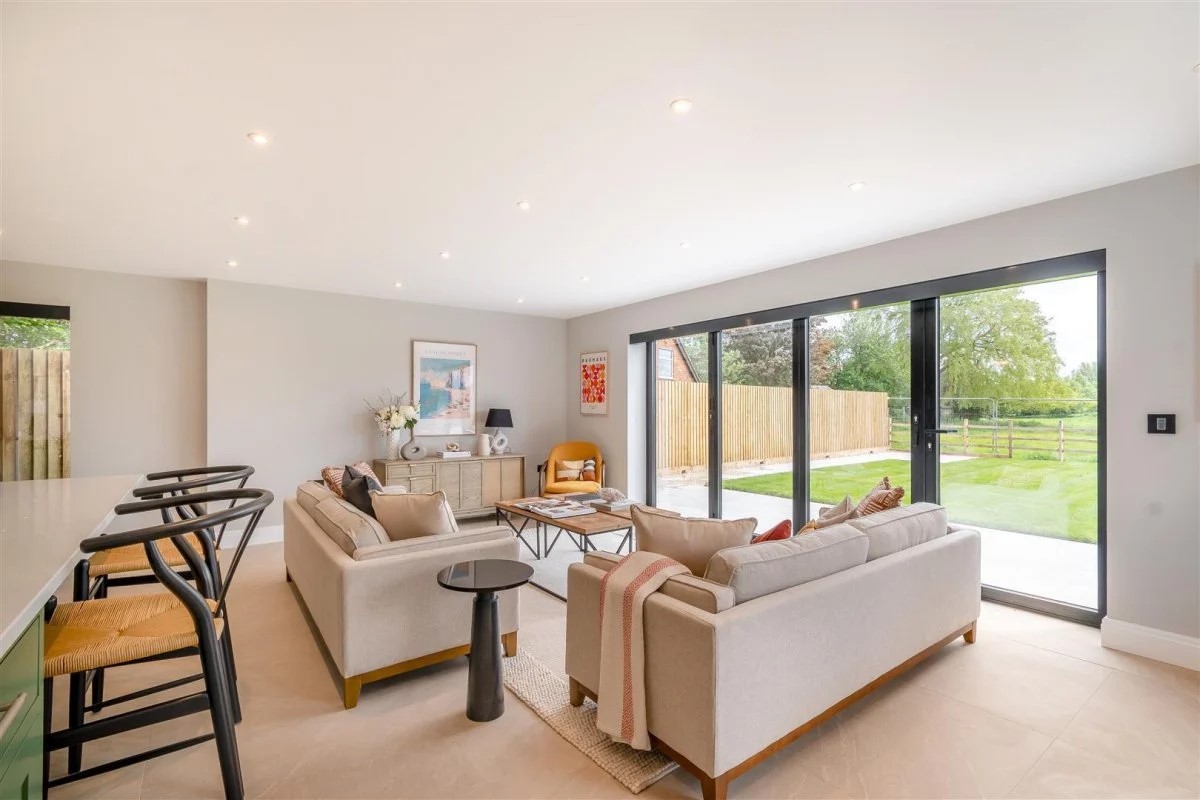
At Maple Barn, a four-bedroom new build by Kaybee Developments, the system was specified at M&E stage and pre-configured before delivery. It manages lighting, heating, blinds, and security across the property, alongside the air source heat pump, MVHR, and solar PV with battery storage.
Multi-zone underfloor heating runs across the ground floor, with electric UFH in the ensuites and towel rails on the same control. Multi-functional keypads in each room provide local control without an app. Scenes for "goodbye", "goodnight","welcome", and "good morning" tie lighting, heating, and shading together. The system handles roughly 500 temperature control events per week without intervention.
The install was completed by the developer's electrician on a standard first and second fix schedule. There was no on-site programming visit.
Where it does not fit
Pre-configured systems are designed for new build and major refurbishment projects where the wiring can be planned and installed during construction. They are not suitable for finished homes where retrofitting hardwired control would require significant disruption.
Cost and programme implications
The cost of a pre-configured system on a £700,000 to £2M new build typically falls within the electrical package, rather than sitting as a separate line item with its own design and commissioning fees. Removing the on-site programming phase also removes a week or two of float at the end of the programme, which can matter on a tight handover.
For developers running multiple units on a scheme, the same configuration approach can be repeated across plot types, with room-specific variations handled at the panel-build stage rather than on site.
More Insights